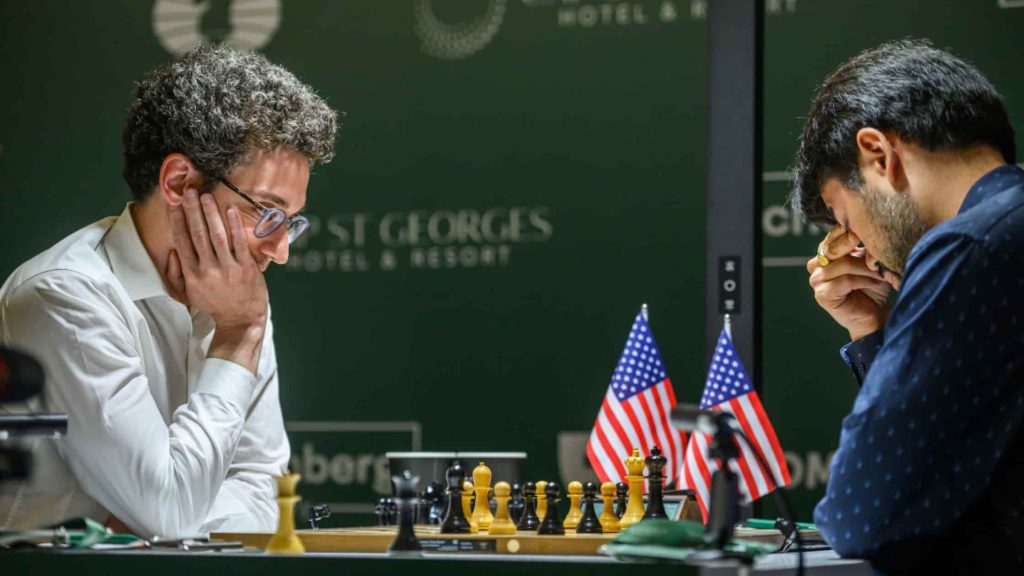
The FIDE Candidates Tournament 2026 will determine who challenges Gukesh D for the World Chess Championship title. Eight elite players compete in a double round-robin format from April 3-23, 2026, in Toronto, Canada. The winner earns the right to face the reigning champion in the World Championship match later this year.
What Is the FIDE Candidates Tournament?
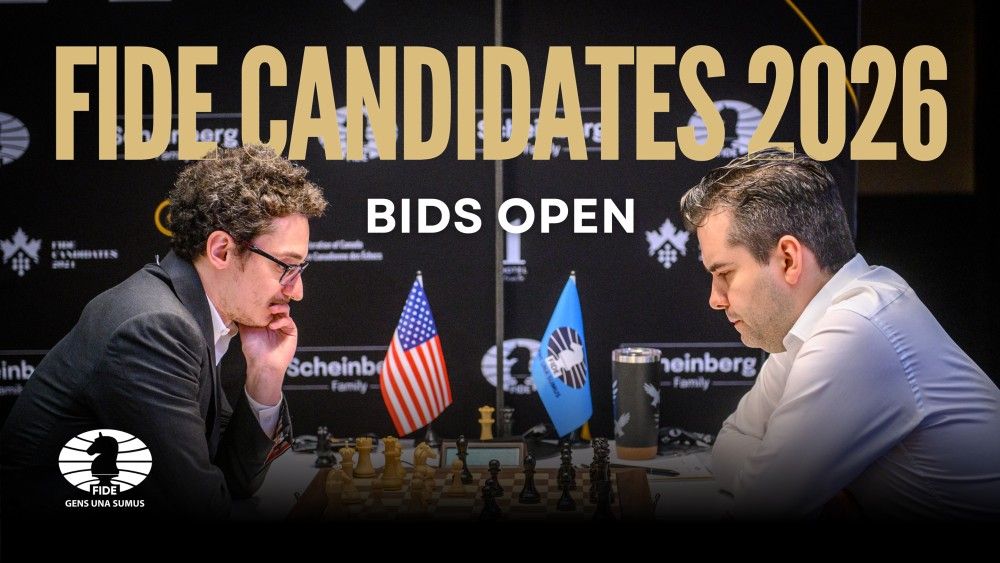
The Candidates Tournament is chess’s ultimate qualifier. It brings together the world’s top grandmasters who battle for one prize: a shot at the World Chess Championship.
Think of it as the chess equivalent of a championship playoff. Only the strongest survive.
Tournament Format and Structure
The 2026 edition follows a 14-round double round-robin system. Each player faces every other player twice, once with white pieces and once with black.
Here’s how the scoring works:
Scoring System:
- Win: 1 point
- Draw: 0.5 points
- Loss: 0 points
The player with the highest score after 14 rounds becomes the challenger. If there’s a tie, tiebreak rules apply based on head-to-head records and other criteria specified by FIDE.
Games use classical time controls: 120 minutes for 40 moves, then 60 minutes for the next 20 moves, followed by 15 minutes for the rest of the game, with a 30-second increment per move starting from move 61.
Tournament Dates and Venue
Key Tournament Details:
| Detail | Information |
|---|---|
| Start Date | April 3, 2026 |
| End Date | April 23, 2026 |
| Location | Toronto, Canada |
| Venue | To be confirmed |
| Rest Days | April 7, 13, 19 |
The three-week event runs continuously with strategic rest days placed after every five rounds. This schedule helps players recover mentally between the grueling classical chess battles.
Toronto hosts the tournament for the first time, marking FIDE’s continued effort to bring major chess events to different continents.
Qualified Players for Candidates 2026
Eight players have secured their spots through various qualification pathways. Here’s the complete lineup:
Qualified for the World Cup 2023
Praggnanandhaa R (India) and Nijat Abasov (Azerbaijan) earned their tickets by reaching the World Cup final in Baku. Pragg’s run to the final made him the youngest Indian Candidate participant at just 18 years old.
Grand Prix Winners
Hikaru Nakamura (United States) and Alireza Firouzja (France) qualified through the FIDE Grand Prix 2022 series. Nakamura finally broke through to the Candidates after years of near misses in earlier cycles.
FIDE Grand Swiss 2023
Vidit Gujrathi (India) dominated the Grand Swiss in the Isle of Man, securing his Candidates debut. His performance marked India’s growing strength in elite chess.
Rating Qualification
Fabiano Caruana (United States) qualified based on his average rating across the qualification period. The American grandmaster remains one of the most consistent performers in world chess.
Wildcard Selection
Ian Nepomniachtchi (Russia) received a wildcard entry from FIDE. Nepo has played in multiple Candidates tournaments and two World Championship matches, bringing valuable experience to the field.
Nominees
One spot remains for a nominated player, typically announced closer to the tournament start. FIDE reserves this right to ensure strong field quality or recognize exceptional achievements.
India’s Strong Presence
India fields two players in this Candidates Tournament: Praggnanandhaa R and Vidit Gujrathi. This marks a historic moment for Indian chess.
Both players bring different strengths. Pragg plays aggressive, tactical chess with fearless opening preparation. Vidit relies on solid positional understanding and exceptional endgame technique.
Their participation comes just months after Gukesh D became the youngest World Chess Champion in December 2024 at age 18. India’s chess ecosystem has exploded with talent, producing multiple 2700+ rated players and world-class coaches.
The Indian chess community will watch closely. If either Pragg or Vidit wins, it sets up an all-Indian World Championship match, something unthinkable just a decade ago.
Prize Fund and Financial Details
The total prize fund for the Candidates Tournament 2026 has not been officially announced yet. However, based on previous editions:
The 2024 Candidates in Toronto featured a €500,000 prize pool (approximately $540,000 at 2024 exchange rates).
Distribution typically follows this pattern:
Expected Prize Distribution:
- 1st place: ~€100,000
- 2nd place: ~€80,000
- 3rd place: ~€70,000
- Remaining places: Decreasing amounts
The winner’s real prize isn’t just the money. It’s the chance to compete for the World Championship title and potentially earn millions more through sponsorships, appearance fees, and the championship prize fund itself.
How to Watch the Tournament
Live Coverage Options:
Multiple platforms will broadcast the games with expert commentary:
- FIDE’s official website (candidates2026.fide.com) provides free live boards
- Chess.com and Lichess.org offer live analysis and computer evaluation
- YouTube channels from major chess personalities will provide live commentary
- Chess24.com typically streams premium coverage with top grandmasters
Games start at times convenient for both European and American audiences, though exact start times will be announced closer to the event.
Indian fans can expect local chess platforms and sports channels to provide Hindi and English commentary tailored to home audiences.
Historical Context and Significance
The Candidates Tournament has existed since 1950, originally designed to identify a challenger for the World Champion. Its format has evolved, but the purpose remains unchanged.
Recent editions have produced dramatic results. In 2024, Gukesh D won the Candidates at 17, becoming the youngest winner ever. He then defeated Ding Liren to claim the world title.
The 2026 tournament carries extra weight. The winner faces Gukesh, who’s proven himself under pressure. Beating a young, motivated champion requires peak preparation and mental toughness.
What Makes This Edition Special
Several factors make the 2026 Candidates unique:
Youth vs Experience: The field mixes teenage prodigies (Pragg) with seasoned veterans (Caruana, Nepomniachtchi). Different generations clash over the board.
Indian Representation: Two Indian players are competing while an Indian holds the world title. The psychological dynamics add intrigue.
Nakamura’s Quest: Hikaru has never reached a World Championship match despite decades at the top. At 38, this might be his best chance.
Firouzja’s Redemption: After a disappointing 2022 Candidates performance, Alireza returns hungry to prove himself.
The tournament format ensures every game matters. One bad day can derail championship dreams. One brilliant performance can change careers.
Key Players to Watch
Hikaru Nakamura
The American streaming sensation brings millions of online fans. His tactical vision and time management skills make him dangerous in any position. Recent form shows he’s peaking at the right time.
Fabiano Caruana
Fabi challenged Magnus Carlsen in 2018, drawing 12 classical games before losing in rapid tiebreaks. His theoretical knowledge in openings is encyclopedic. He grinds down opponents with precise technique.
Ian Nepomniachtchi
Nepo has been here before. Twice. His experience in high-pressure situations gives him an edge. He plays sharp, complicated chess that can overwhelm opponents.
Alireza Firouzja
Once the youngest 2800-rated player, Alireza possesses raw talent few can match. If he finds consistency, he’s nearly unstoppable.
Praggnanandhaa R
Pragg defeated Magnus Carlsen multiple times in rapid and blitz. His fearless approach and creative preparation make him unpredictable. Don’t let the age fool you.
Vidit Gujrathi
India’s solid performer. Vidit rarely loses but needs to convert more wins to contend. His theoretical knowledge and calm demeanor serve him well in long tournaments.
Tournament Regulations and Rules
FIDE enforces strict regulations:
- Anti-cheating measures: Metal detectors, phone bans, and a delay in broadcasting moves
- Fair play protocols: Players are subject to random screening
- Medical timeouts: Limited to specific circumstances with documentation
- Appeals committee: Handles disputes and rule interpretations
Players must arrive 15 minutes before the scheduled start. Late arrival results in time deductions or, in extreme cases, forfeiture.
Draw offers can only be made after move 30, preventing early draws that disappoint fans.
Impact on World Chess Rankings
The Candidates Tournament significantly affects FIDE ratings. Each game carries full rating points despite the elite field strength.
Winning the tournament typically adds 20-30 rating points. A poor performance can substantially drop a player’s rating, affecting future invitations and seeding.
The rating period during the Candidates creates volatility in the world rankings. Multiple high-level games over three weeks lead to rapid rating changes.
Preparation and Opening Theory
Modern candidates’ preparation involves teams of seconds, computer analysis, and psychological conditioning.
Top players typically:
- Analyze opponent’s recent games for patterns
- Prepare novelties (new moves) in key opening lines
- Study endgame positions specific to likely scenarios
- Work with sports psychologists on mental resilience
Opening preparation has reached extreme depth. Players prepare 30+ moves deep in critical variations, turning the opening phase into a memory contest.
The rise of neural network engines like Stockfish, NNUE, and Leela Chess Zero has revolutionized preparation. These engines find positional ideas humans might miss.
What Happens After the Tournament
The winner becomes the official challenger for the World Chess Championship match against Gukesh D.
Next Steps:
- Challenger and champion negotiate match terms with FIDE
- Venue selection and sponsorship finalization
- Match typically scheduled for late 2026 or early 2027
- 14-game match with tiebreak provisions
The World Championship match carries a much larger prize fund, usually €2 million or more, split 60-40 between winner and loser.
If Pragg or Vidit wins, an all-Indian championship match would generate massive interest in India, potentially attracting major corporate sponsors and mainstream media coverage.
How This Tournament Shapes Chess History
Every Candidates’ Tournament produces moments that define careers. A single brilliant game can become immortal. A crucial blunder haunts players forever.
The 2026 edition will determine who challenges the youngest world champion in history. That narrative alone guarantees attention beyond the chess world.
For Indian chess, this tournament represents validation. From Anand’s era to Gukesh’s generation, the progression shows India’s systematic development of chess talent through academies, coaches, and government support.
The winner enters chess history books. The path starts on April 3 in Toronto.
Also Read:
- Upcoming Major Sports Events in India 2026 (Calendar)
- Top Sports Universities in India (2026 Rankings)
The FIDE Candidates Tournament 2026 promises three weeks of intense chess as eight elite players battle for a shot at the World Championship
With India’s rising presence, experienced veterans seeking redemption, and young talents proving themselves, this edition carries unique storylines. The tournament runs April 3-23 in Toronto, determining who faces Gukesh D for chess’s ultimate prize.