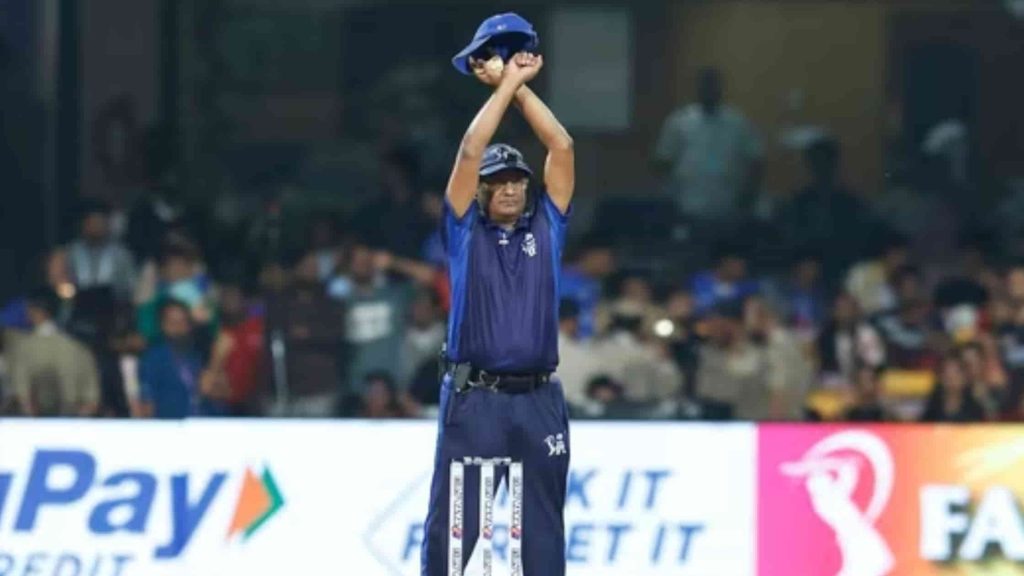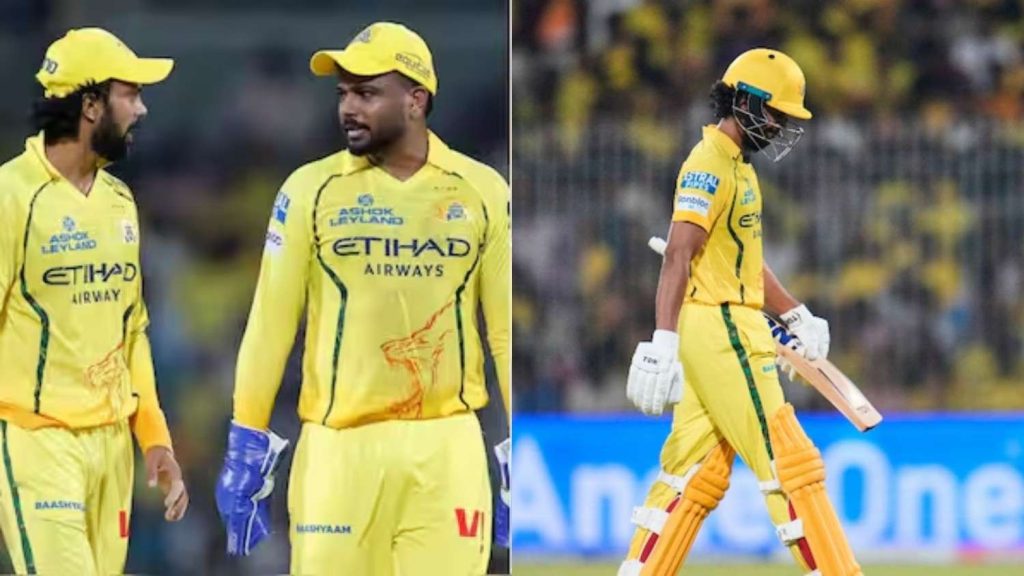
The Impact Player rule allows IPL teams to substitute one player from their starting XI during a match, effectively giving them access to 12 players instead of 11.
First introduced in IPL 2023 by the Board of Control for Cricket in India (BCCI), this tactical substitution rule has transformed how franchises build squads and approach matches.
The rule continues through IPL 2027, as confirmed by the IPL Governing Council in September 2024.
Since its implementation, scoring rates have exploded. Teams crossed 200 runs 130 times in just three seasons (2023-2025), nearly matching the 133 instances across the first 15 IPL seasons combined (ESPN).
How Does the Impact Player Rule Work?
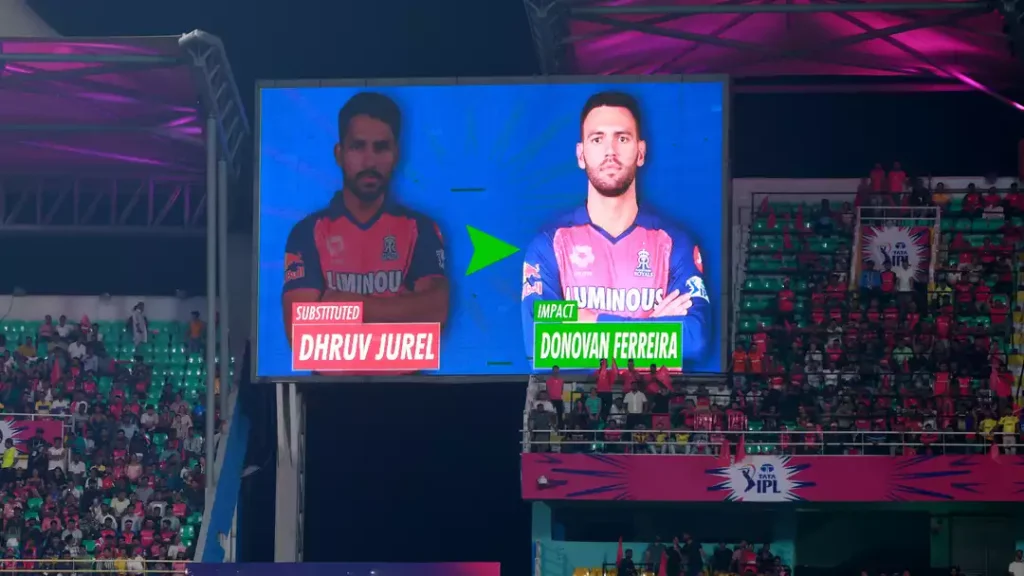
Understanding the mechanics is straightforward once you break it down step by step.
Pre-Match Preparation
Before the toss, each team submits two lists to the match referee: a Playing XI and a list of four to five substitute players.
Only players from this pre-submitted substitute list can be used as the Impact Player.
Once these lists are locked, they cannot be changed even if a player gets injured during warm-ups.
When Can You Make the Substitution?
Captains can introduce their Impact Player only during natural breaks in the game:
At the start of an innings
At the end of an over
After the fall of a wicket
When a batter retires (hurt or out)
You cannot bring in the Impact Player mid-over. If a new player enters after a wicket falls during an over, they cannot bowl the remaining deliveries of that over.
The Overseas Player Restriction
IPL teams can field a maximum of four overseas players at any time. This rule applies to Impact Players too.
If your starting XI already has four overseas players, your Impact Player must be an Indian.
However, if you start with three or fewer overseas players, you can bring in a foreign Impact Player.
For example, if Mumbai Indians start with three overseas players and need death-over firepower, they can use an overseas Impact Player to complete the four-player quota.
Key Rules to Remember
The replaced player cannot return to the game. Once substituted, they are done for the match.
Each team gets only one Impact Player substitution per match.
The Impact Player becomes a full participant and can bat, bowl, and field without restrictions.
Captains must inform the umpires before making the substitution.
Impact Player Rule: Quick Reference
| Aspect | Details |
|---|---|
| Substitutions Per Match | One per team |
| Substitute Pool | 4-5 players named before the toss |
| Timing | Start of innings, end of over, wicket fall, batter retirement |
| Overseas Restriction | Max 4 overseas players on field at any time |
| Player Return | Replaced player cannot return to the match |
| Rule Duration | Confirmed through IPL 2027 |
How Is Impact Player Different from Concussion Substitute?
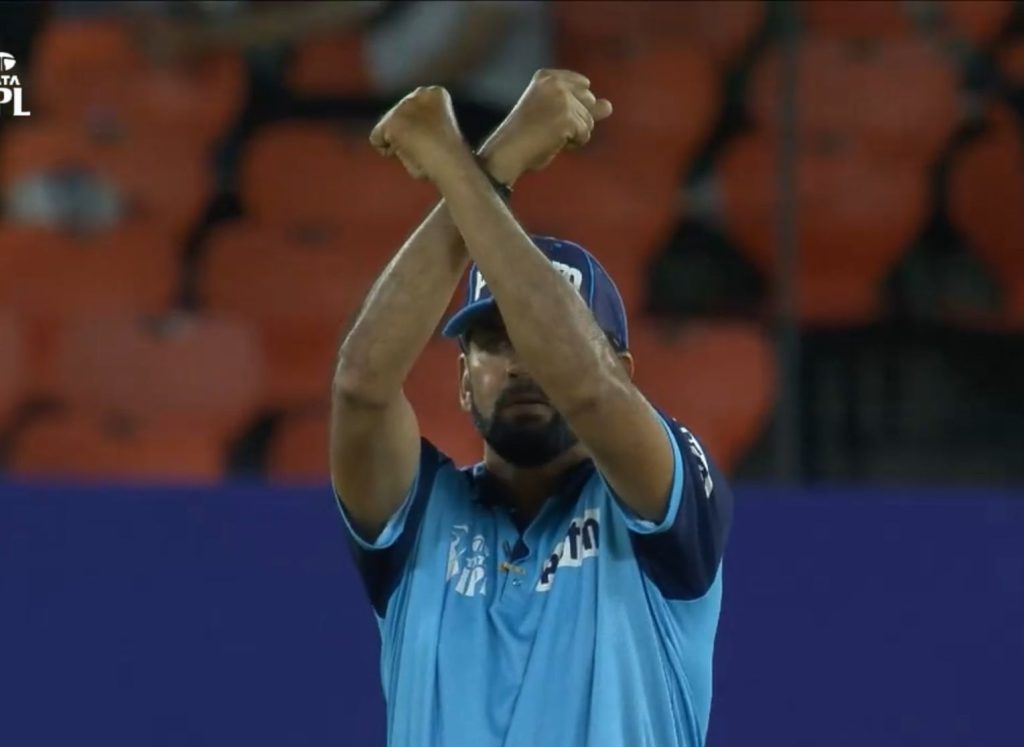
People often confuse these two rules, but they serve completely different purposes.
A concussion substitute is an injury-forced replacement. It kicks in only when a player suffers a head injury during a match.
The substitute can bat and bowl, but this decision is not tactical. It is a safety measure mandated by ICC regulations.
In contrast, the Impact Player is a purely tactical substitution. Teams make this choice based on match conditions, not injuries.
Additionally, regular substitute fielders in international cricket can only field. They cannot bat or bowl.
The Impact Player has no such restriction. Once introduced, they become full participants in the game.
When Was the First Impact Player Used in IPL History?
Tushar Deshpande wrote his name in the history books on March 31, 2023.
The Chennai Super Kings pacer became the first-ever Impact Player in IPL history during the season opener against the Gujarat Titans at the Narendra Modi Stadium in Ahmedabad.
CSK had just posted 178/7 with Ruturaj Gaikwad scoring a brilliant 92 off 50 balls.
At the innings break, CSK replaced batter Ambati Rayudu with Deshpande to strengthen their bowling attack for the defense.
The move did not go perfectly. Deshpande conceded 29 runs in his two overs, including a six off his very first delivery from Wriddhiman Saha.
Gujarat Titans also used their Impact Player in the same match. After Kane Williamson injured his knee while fielding, Sai Sudharsan came in as a batting replacement.
Interestingly, MS Dhoni himself had expressed thoughts about the rule at the toss, saying, “It is a luxury to have the impact player rule. The influence of the all-rounder has become slightly less because of the rule.”
How Has the Impact Player Rule Changed IPL Cricket?
The numbers do not lie. This rule has fundamentally altered IPL cricket in ways both expected and surprising.
Explosion of 200+ Scores
The most obvious change is the dramatic increase in high-scoring matches.
200+ Scores in IPL History
| Period | 200+ Totals |
|---|---|
| 2008-2022 (15 seasons) | 133 |
| IPL 2023 | 37 |
| IPL 2024 | 41 |
| IPL 2025 | 52 |
| 2023-2025 Total (3 seasons) | 130 |
In IPL 2025, 36.62% of innings crossed the 200-run mark. Before 2023, that number hovered around 12%.
The percentage of 200+ scores rose from 12.16% in 2022 to 25% in 2023, then to 28.47% in 2024, and finally to 36.62% in 2025.
Batting Has Become Bolder
Teams no longer bat cautiously when they know an extra batter is waiting in the dugout.
Strike rates have increased across the board. The average runs per over jumped from 8.64 in 2018 (the previous high) to 8.99 in 2023 and crossed 9 for the first time ever in 2024.
IPL 2025 saw 2,245 fours hit during the season, the most in any edition. Similarly, 1,294 sixes were smashed, breaking the previous record of 1,260 from 2024.
Successful High-Run Chases Have Become Common
Teams chased down 200+ totals nine times in IPL 2025 alone. Between 2015 and 2022, there were only eight such successful chases across eight entire seasons.
The highest successful chase in IPL history came in 2024 when the Punjab Kings chased 262 against the Kolkata Knight Riders at Eden Gardens.
How Teams Use It Strategically
Teams batting first often include an extra batter in their XI, knowing they can swap in a bowler as the Impact Player during the chase.
Conversely, teams batting second can start with more bowling options and bring in a pinch-hitter if wickets fall early or the run rate demands aggression.
Some captains like Faf du Plessis and Rohit Sharma have even been used as Impact Players themselves. This allows them to bat aggressively in the powerplay and then be replaced to reduce their fielding workload.
In IPL 2025, Faf maintained a strike rate above 150 using this approach. Rohit sustained a near-150 strike rate across seasons with similar tactical flexibility.
Mumbai Indians used Suryakumar Yadav as an Impact Player in the 2026 season opener against KKR. Head coach Mahela Jayawardene explained this reduced his fielding load while allowing MI to field an extra bowler.
Criticism of the Impact Player Rule
Not everyone is a fan. Several top players and coaches have voiced concerns about this rule.
Impact on All-Rounders
This is the biggest criticism. The rule reduces the need for genuine all-rounders in a team.
Why pick a player who can bat and bowl decently when you can pick a specialist batter AND a specialist bowler, swapping between them as needed?
Rohit Sharma stated in a podcast: “I am not a big fan. It is going to hold back all-rounders. Cricket is played by 11, not 12 players.”
Virat Kohli echoed the concern: “I agree with Rohit. Entertainment is one aspect but there is no balance. I think it has disrupted the balance and a lot of people feel this way, not just me”.
Delhi Capitals captain Axar Patel said it plainly: “I do not like this rule. Earlier, you would pick an all-rounder for both batting and bowling. Now teams prefer specialists”.
Gujarat Titans captain Shubman Gill joined the chorus before IPL 2026, insisting that cricket should remain an 11-player contest.
Impact on Bowlers
Virat Kohli raised another point: “Bowlers are feeling like what they should do. I have never experienced anything like it where bowlers think they will concede a four or a six every ball.”
He added: “We are playing a high level of cricket and it should not be that dominant in my opinion. There is a beauty about having an equal battle between bat and ball.”
Former India coach Rahul Dravid noted the rule makes it harder for coaches to develop young all-rounders who can contribute with both bat and ball.
New Zealand all-rounder Jimmy Neesham called the rule “stupid” because it discourages players from working on their weaker skills. Why improve fielding when you might not even play the full match?
MS Dhoni’s Perspective
Even MS Dhoni offered a nuanced view. When asked about the rule, he said: “When it was first introduced, I felt there was no need to further enhance the league, as it was already in a good position.”
On whether it benefits him, Dhoni replied that it “does and does not” favor him, acknowledging the rule’s complexity.
The Other Side of the Argument
Not everyone opposes the rule.
Ravichandran Ashwin defended it, saying: “The rule worked in our favor” during his time with the Rajasthan Royals. He believes it adds strategic depth to the game.
Former India coach Ravi Shastri backed it too, suggesting players need to evolve with the times.
Former India pacer Zaheer Khan argued: “If you are a genuine all-rounder, no one can stop you. There is always going to be a value addition with the ability with bat and ball”.
Former BCCI president Sourav Ganguly publicly supported the rule, believing it makes the IPL more competitive and encourages teams to think beyond usual strategies.
Is the Impact Player Rule Used in Other Leagues?
Currently, the Impact Player rule is exclusive to the IPL.
The ICC has not introduced it for international cricket. The T20 World Cup 2026 playing conditions still follow the standard 11-player model, with only fielding substitutes allowed.
Interestingly, the BCCI removed the rule from domestic tournaments. The Syed Mushtaq Ali Trophy no longer uses it, allowing domestic cricket to continue with the traditional format.
Other T20 leagues around the world are watching the IPL experiment closely. The rule’s success in boosting entertainment value has inspired some leagues to explore similar formats.
However, as of 2026, no other major international or franchise league has adopted a comparable tactical substitution rule.
What Is the Future of the Impact Player Rule?
The BCCI has confirmed the rule will continue through IPL 2027. After that, a comprehensive review is expected.
During the IPL 2026 captains’ meeting, most skippers expressed reservations about the rule. Yet the decision-makers have maintained their stance that it stays until 2027.
Some possible future modifications include:
Role-based or conditional substitutions to maintain balance between strategy and tradition
Enhanced analytics integration, where teams may use AI or real-time data tools to optimize substitution timing
Minor revisions to ensure fairness and prevent over-dependence on coaching staff decisions
Also Read:
The Impact Player rule has transformed IPL cricket into a high-scoring, specialist-driven contest
Whether you love it or hate it, the numbers speak volumes. Scores have skyrocketed, chases have become routine, and tactical flexibility now defines match outcomes.
For all-rounders and bowlers, the rule presents challenges. For strategists and fans who enjoy high-octane batting, it delivers exactly what they want.
The debate will continue, but for now, the Impact Player rule is here to stay. At least until 2027.